
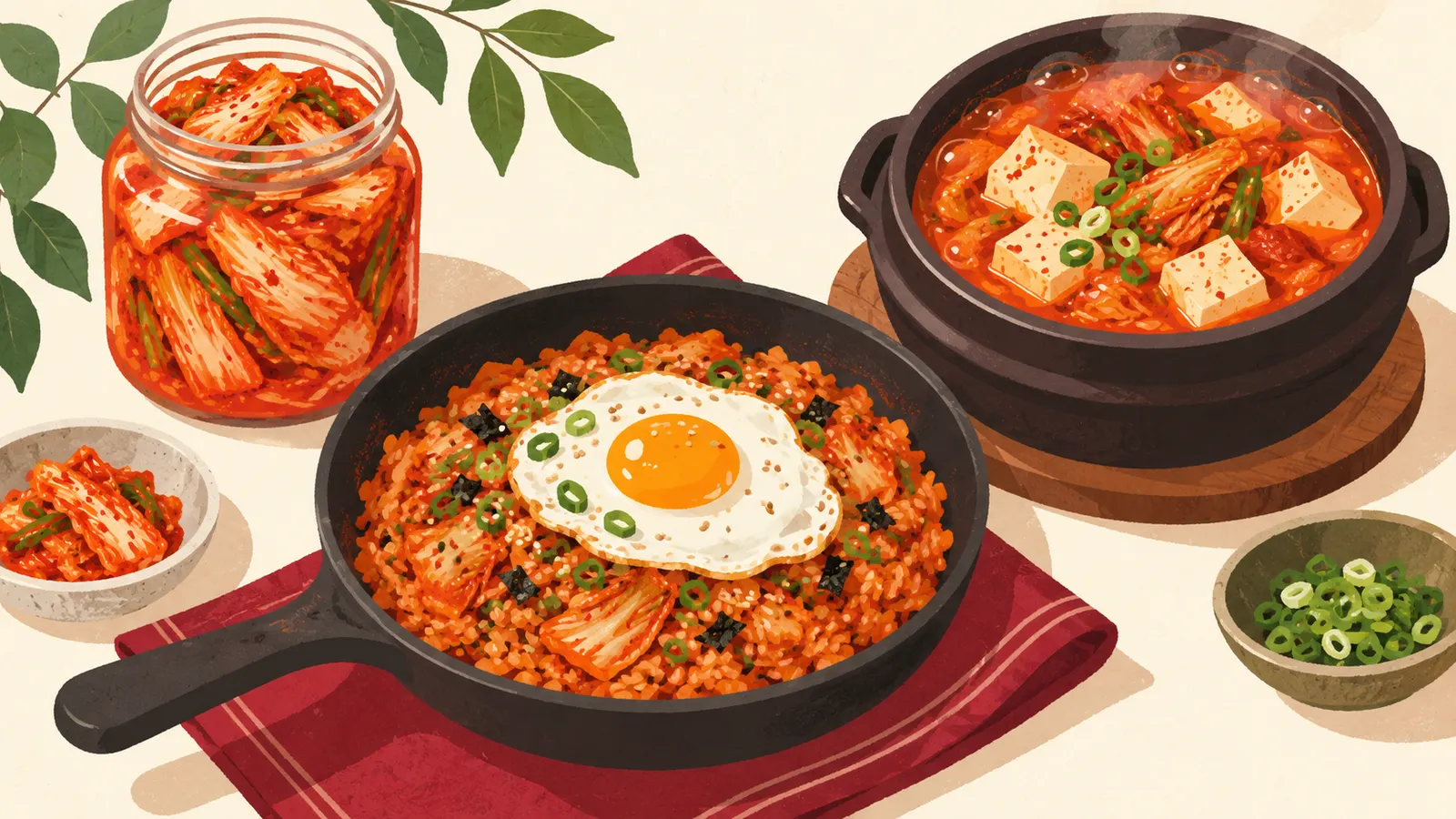
Eat kimchi straight from the jar as a side dish with rice, or cook with it: chop it and fry it into rice or noodles, simmer it into stew, fold it into pancake batter or tuck it into a cheese toastie. Fresh, crunchy kimchi is best raw; older, sourer kimchi is best cooked, where its tang seasons the whole dish.
A jar of kimchi is really two ingredients in one: the vegetables and the red, garlicky brine they sit in. Both are worth using. This guide covers what kimchi is, twelve everyday ways to use it, what to do when a jar has gone very sour, how to store it once it's open, and how to tell if it is vegan. The recipe is kimchi fried rice with a runny fried egg, the classic way to use up the last of a jar.
What is kimchi?
Kimchi (김치) is Korea's family of salted, fermented vegetables. The one most people mean is baechu kimchi: napa cabbage (Chinese leaf) salted, then rubbed with a paste of gochugaru (Korean chilli flakes), garlic, ginger, spring onion and usually fish sauce or salted shrimp, and left to ferment. Lactic acid bacteria turn the natural sugars sour, so the flavour keeps changing for weeks.
- Baechu kimchi: the classic cabbage kimchi. Sold whole-leaf (pogi) or ready-cut into bite-sized pieces (mat kimchi), which is easier to cook with.
- Kkakdugi: cubes of mooli (daikon) radish. Crunchy and slightly sweet; good with soups and fried chicken.
- Oi sobagi: stuffed cucumber kimchi. Eat it fresh, as it softens quickly.
- Baek kimchi: white kimchi made without chilli. Mild and refreshing, and a good choice for anyone who doesn't like heat.
What does kimchi taste like?
Freshly made kimchi tastes salty, garlicky and spicy, with the crunch of raw cabbage. As it ferments it becomes sour, a little fizzy and more complex, a bit like a punchy sauerkraut with chilli and garlic. How hot it is depends on the maker: most shop-bought cabbage kimchi is medium, and the heat mellows when you cook it.
12 ways to use kimchi
- As banchan. Serve a small dish of it cold alongside rice, grilled meat, fried eggs or a bowl of noodles. This is how kimchi is eaten at almost every Korean meal.
- Kimchi fried rice (kimchi bokkeumbap). Fry chopped kimchi in butter or oil, add cold rice and a splash of the brine, and top with a fried egg. Full recipe below.
- Kimchi jjigae (kimchi stew). Simmer 300g sour kimchi with pork belly or tuna, a spoon of gochugaru, tofu and 600ml water or stock for 20 to 25 minutes. The sourer the kimchi, the better the stew.
- Kimchi pancakes (kimchi jeon). Mix 150g chopped kimchi, 3 tbsp kimchi brine, 100g plain flour and about 100ml cold water into a thick batter. Fry thin rounds in plenty of oil until crisp on both sides.
- Instant noodles. Add a handful of kimchi to a pack of ramyeon for the last minute of cooking, or eat it on the side. A slice of cheese melted on top is a popular Korean shortcut.
- Cheese toastie. Squeeze chopped kimchi dry and layer it with Cheddar or mozzarella. The sharpness cuts through the cheese.
- Scrambled eggs or omelette. Fry a spoonful of chopped kimchi in butter for a minute before adding the eggs.
- Dumpling filling. Squeeze kimchi hard, chop it finely and mix with pork mince and crumbled tofu for kimchi mandu.
- Kimchi mayo. Blitz or finely chop 2 tbsp kimchi into 4 tbsp mayonnaise. Use it on burgers, fried chicken or chips.
- Cold noodles. Toss cooked, rinsed somen or buckwheat noodles with chopped kimchi, a little gochujang, sesame oil, sugar and rice vinegar for a quick bibim guksu.
- Tacos, quesadillas and hot dogs. Kimchi works anywhere you would use a sharp pickle or slaw.
- Use the brine. Kimchi juice is seasoned, sour and spicy. Add a spoonful to salad dressings, marinades, Bloody Marys or soup instead of vinegar and salt.
What to do with old, sour kimchi
Very sour kimchi isn't past it. Koreans call well-aged kimchi mugeunji (묵은지) and seek it out for cooking, because the deep sourness gives stews and fried rice their flavour. If a jar has become too sharp to enjoy cold, move it from the side-dish column to the cooking column:
- Best uses for sour kimchi: kimchi jjigae, kimchi fried rice, kimchi pancakes, dumpling fillings and budae jjigae (army stew).
- Best uses for fresh kimchi: eating raw as banchan, in toasties and sandwiches, on tacos and with grilled meat, where the crunch matters.
- To slow the souring, keep the jar at the back of the fridge, where it's coldest, and press the cabbage down under the brine each time you take some out.
Recipe: kimchi fried rice (kimchi bokkeumbap)
Kimchi fried rice is the dish to make when a jar is nearly empty and quite sour. It takes about 20 minutes and uses cold leftover rice, which fries without turning sticky. For more on why day-old rice works, and how to get fluffy grains, see our guide to making egg fried rice.
Recipe
Kimchi fried rice (kimchi bokkeumbap) with fried egg
Sour kimchi fried in butter with cold rice, a little gochujang and sesame oil, topped with a crisp-edged fried egg. A 20-minute dinner that uses up the end of a jar.
- Serves
- 2 people
- Prep
- 5 min
- Cook
- 15 min
- Total
- 20 min
Ingredients
- 200g cabbage kimchi, preferably well fermented and sour, plus 3 tbsp of its brine
- 450g cold cooked short- or medium-grain rice (from about 200g uncooked)
- 100g pork belly slices, streaky bacon or Spam, cut into small pieces (optional)
- 1 tbsp butter
- 1 tbsp neutral oil, plus extra for the eggs
- 2 spring onions, whites and greens sliced separately
- 1 tsp gochujang (optional, for more depth and colour)
- 1 tsp gochugaru (optional, for more heat)
- 1 tsp light soy sauce
- ½ tsp sugar, more if the kimchi is very sour
- 1 tsp toasted sesame oil
- 2 eggs
- 1 tsp toasted sesame seeds and a small handful of roasted seaweed (gim), crumbled, to serve
Method
- 1Chop the kimchi into roughly 1cm pieces on a board (or snip it in the bowl with scissors) and keep the brine. Break up any clumps of cold rice with your fingers so the grains separate.
- 2Heat the oil in a large frying pan or wok over a medium-high heat. If using pork, bacon or Spam, fry it for 3 to 4 minutes until browned and the fat has run.
- 3Add the butter, the spring onion whites and the kimchi. Fry, stirring, for 3 to 4 minutes until the kimchi softens, smells toasty and the edges start to catch. Stir in the gochujang and gochugaru, if using, for 30 seconds.
- 4Add the rice, kimchi brine, soy sauce and sugar. Toss and press the rice against the pan for 3 to 4 minutes until every grain is red, hot and starting to crisp in places. Taste and add more sugar or soy if needed.
- 5Turn off the heat and stir through the sesame oil and spring onion greens. Spread the rice flat and leave it for a minute so the base crisps a little more.
- 6Meanwhile, fry the eggs in a little oil in a separate pan over a medium-high heat for 2 to 3 minutes, until the whites are set with crisp, golden edges and the yolks are still runny.
- 7Divide the rice between two bowls, top each with an egg and finish with sesame seeds and crumbled seaweed. Break the yolk and stir it through as you eat.
How long does kimchi last in the fridge after opening?
Keep opened kimchi in the fridge with the lid closed, and follow the use-by or best-before date and the storage advice on the jar. Because it is salty and acidic, kimchi keeps far longer than fresh vegetables, but it never stops fermenting: each week in the fridge it gets a little sourer and softer. That's a change in flavour, not spoilage.
- Use clean utensils. Always take kimchi out with a clean, dry spoon or chopsticks, never your fingers, to avoid bringing in mould.
- Keep it under the brine. Press the vegetables down after each use so they stay submerged, and keep the jar tightly closed. Kimchi has a strong smell that can spread to other food, so a sealed box or a second bag helps.
- Expect fizz. A bulging lid or a hiss when you open the jar is carbon dioxide from fermentation, which is normal. Open it over the sink, as the brine can bubble over.
- Don't store it at room temperature. Once opened, kimchi belongs in the fridge. Left out, it sours very fast.
Does kimchi go off?
Yes, eventually. Sourness alone isn't a problem, but throw the whole jar away if you see fuzzy mould (white, green, blue or black) on the surface, if the cabbage has turned slimy or mushy, or if it smells rotten rather than sour. If in doubt, throw it out rather than scraping off the top.
Is kimchi vegan?
Usually not. Traditional cabbage kimchi is seasoned with fish sauce, salted shrimp (saeujeot) or other salted seafood, known collectively as jeotgal (젓갈). Some recipes also add oysters or anchovy stock. Always check the ingredients list: vegan kimchi replaces the seafood with salt, soy sauce, seaweed or mushroom stock, and is usually labelled vegan or vegetarian on the front of the jar. Most kimchi is gluten free, but a few brands use wheat-based soy sauce or a flour paste, so check the label if that matters to you.
| Fresh kimchi | Sour (aged) kimchi | |
|---|---|---|
| Taste | Salty, garlicky, spicy, lightly tangy | Sharply sour, deeper and more savoury |
| Texture | Crunchy cabbage | Softer, slightly limp |
| Best for | Side dish, sandwiches, tacos, grilled meat | Stew, fried rice, pancakes, dumplings |
| How to tell | Brine is thick, little fizz | Brine is thinner and fizzy; smell is sharp |
What you'll need
Everything you need to cook with kimchi, or start making your own.
- Kimchi fermentation containerAn airtight container with a press plate keeps kimchi submerged and stops the fridge smelling.See options on Amazon (affiliate link, opens in a new tab)
- Gochugaru (Korean chilli flakes)Fruity, medium-hot flakes for kimchi, stews and dipping sauces.See options on Amazon (affiliate link, opens in a new tab)
- Short-grain riceKorean and Japanese short-grain rice are close cousins; either works for kimchi fried rice and bibimbap.See options on Amazon (affiliate link, opens in a new tab)
Some links on this page are affiliate links: if you buy through them we may earn a small commission, at no extra cost to you. It never affects which shops we list. How we make money.
Where to buy kimchi in the UK
Most big supermarkets sell a small jar of kimchi, but a Korean grocer will have a whole chiller of it: cabbage, radish and cucumber kimchi, white kimchi, vegan versions and large tubs that cost much less per gram. Our directory lists 125 stores stocking Korean groceries. 29 of them are Korean specialists, and those usually have the widest choice of kimchi in the chiller. The best-served cities are London, Glasgow and Edinburgh.
Itaewon Korean Supermarket in Norwich and the Oseyo shop in Manchester's Arndale Centre both list kimchi among their specialities, and Korea Foods in New Malden carries a large Korean range including fresh meat. Ranges vary, so call ahead if you want a particular type. For the rest of the Korean shopping list, read where to buy gochujang and Korean groceries in the UK.
Korean groceries by city
- Korean groceries in London35 stores
- Korean groceries in Glasgow7 stores
- Korean groceries in Edinburgh5 stores
- Korean groceries in Cambridge4 stores
- Korean groceries in Canterbury4 stores
- Korean groceries in Nottingham4 stores
- Korean groceries in Birmingham3 stores
- Korean groceries in Brighton & Hove3 stores
- Korean groceries in Bristol3 stores
- Korean groceries in Leeds3 stores
- Korean groceries in Manchester3 stores
Kimchi and gochujang go together in almost every recipe above. Our guide to how to use gochujang has ten more ways to cook with Korea's chilli paste, and Korean barbecue at home shows kimchi in its other classic role, alongside grilled meat.