
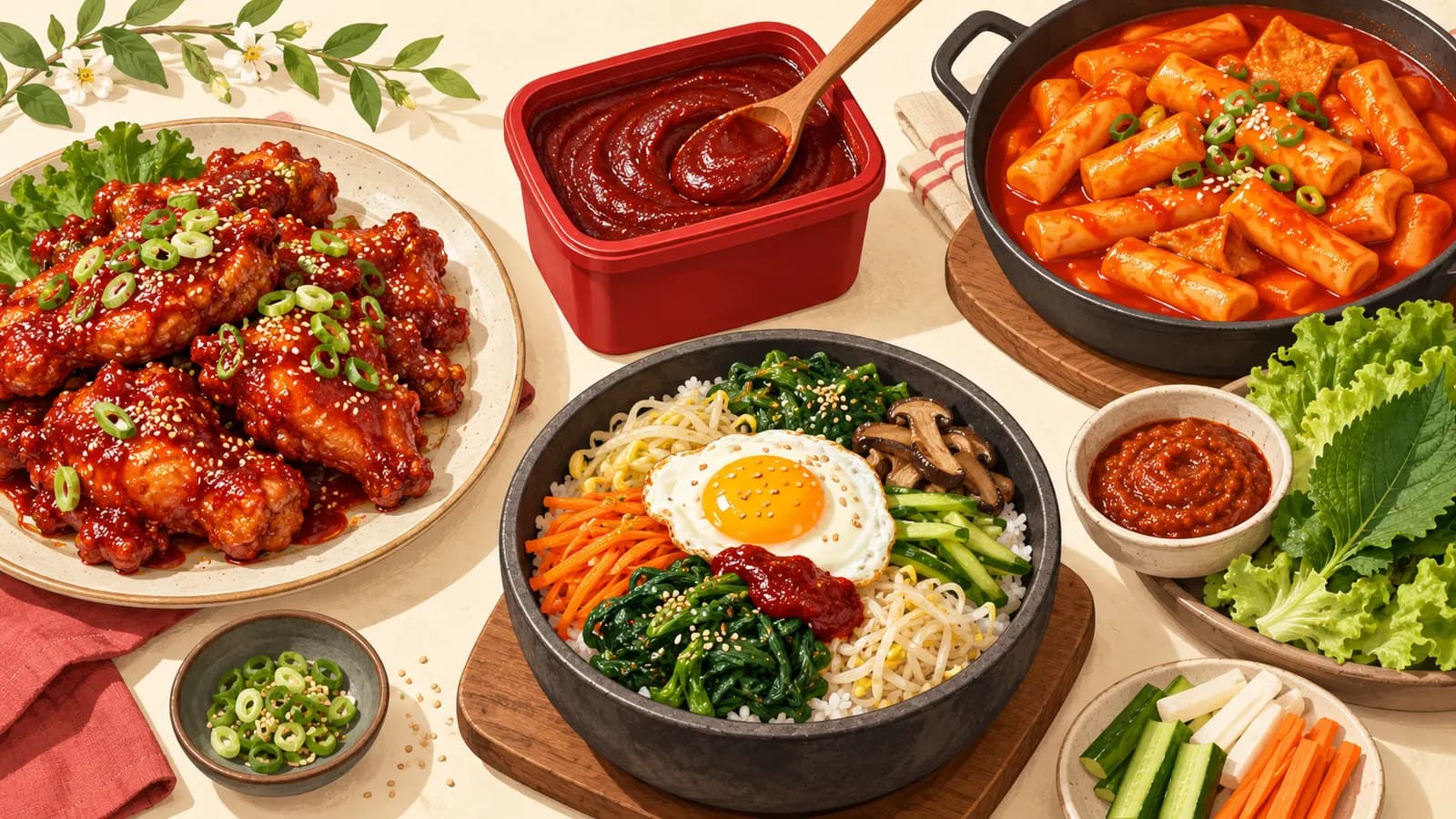
Use gochujang as a seasoning paste rather than a hot sauce: loosen a spoonful with something sweet, sour or oily (honey, rice vinegar, sesame oil, butter) and stir it into marinades, stews, glazes, dressings and fried rice. A tablespoon is enough to season a meal for two.
Straight from the tub it is thick, sticky and quite salty, which is why it almost never goes into a dish on its own. Once you know how to balance it, it becomes one of the most useful jars in the fridge. This guide covers what it is, how hot it is, ten everyday ways to use it, what to do if you run out, and a 20-minute gochujang chicken to start with.
What is gochujang?
Gochujang (고추장) is a fermented Korean chilli paste. The basic recipe is Korean chilli powder (gochugaru), glutinous rice or another starch, powdered fermented soybeans (meju) and salt, left to ferment so the starch turns sweet and the flavour deepens. Most commercial pastes also add a sweetener such as rice syrup or corn syrup, and many contain wheat, so check the label if you avoid gluten.
It belongs to the same family as doenjang (된장), Korea's fermented soybean paste, and the two are mixed to make ssamjang, the dip served with grilled meat and lettuce wraps. In Korean cooking gochujang is a base flavour, much like tomato purée or miso, rather than a condiment you splash on at the table.
What does gochujang taste like?
Sweet first, then savoury and salty, with a slow, rounded heat that builds rather than stings. There is a slight funk from the fermented soybeans, a little like miso, and a gentle smokiness from the dried chillies. It tastes nothing like sriracha or chilli sauce, which are thinner, sharper and more vinegary.
How hot is gochujang?
Heat varies by brand. Many Korean tubs print a heat grade on the label, from mild through medium-hot to very hot. A mild or medium paste is the most versatile for cooking; a very hot one is best used in smaller amounts in stews. Cooking mellows the heat slightly, and sugar, dairy and fat soften it further.
10 ways to use gochujang
- Bibimbap sauce. Spoon the basic sauce above over rice, sautéed vegetables, a fried egg and kimchi, then mix everything together before eating.
- Marinade for pork, chicken or tofu. Add grated ginger and a little grated pear or apple to the basic sauce and marinate for 30 minutes to overnight. This is the backbone of jeyuk bokkeum, spicy stir-fried pork. Wipe off excess before cooking, as the sugar catches quickly.
- Sticky glaze. Brush it over chicken wings, salmon, pork chops or halloumi in the last few minutes under the grill or in the pan, when the meat is almost cooked.
- Stews and soups. Stir a tablespoon into kimchi jjigae, budae jjigae (army stew) or a pot of instant ramyeon. Dissolve it in a ladle of the hot stock first so it doesn't stay in lumps.
- Tteokbokki. Simmer rice cakes in 400ml stock with 2 tbsp gochujang, 1 tbsp gochugaru, 1 tbsp sugar and 1 tbsp soy sauce until the sauce is thick and glossy, about 10 minutes.
- Gochujang mayo. Mix 1 tbsp gochujang into 4 tbsp mayonnaise with a squeeze of lime. Use it on burgers, fried chicken sandwiches, chips or as a dip for dumplings.
- Gochujang butter. Mash 1 tbsp into 50g soft butter. Toss through hot noodles, melt over corn on the cob or steak, or spread on toast under a fried egg.
- Fried rice. Fry chopped kimchi and spring onion in oil, add a teaspoon of gochujang to toast for 30 seconds, then add day-old rice and a splash of soy. Finish with sesame oil.
- Salad dressing. Whisk 1 tbsp gochujang with 2 tbsp rice vinegar, 1 tbsp sesame oil, 1 tsp sugar and 1 tbsp water. Lovely on cucumber, shredded cabbage or cold soba.
- Roast vegetables. Toss cauliflower, squash, carrots or sweet potato in oil and roast until nearly done, then coat with the basic sauce and return to the oven for 5 to 8 minutes.
Recipe: 20-minute gochujang chicken thighs
Boneless chicken thighs stay juicy over a high heat and soak up the glaze, and the whole thing is ready in the time it takes to cook a pan of rice. The trick is to brown the chicken properly first and add the sauce only at the end, because the sugar in gochujang burns quickly. See our guide to cooking perfect rice for the side.
Recipe
20-minute gochujang chicken thighs
Pan-fried chicken thighs in a sticky, sweet-spicy gochujang glaze. A quick weeknight dinner that needs one pan and a handful of store-cupboard ingredients.
- Serves
- 3 to 4 people
- Prep
- 5 min
- Cook
- 15 min
- Total
- 20 min
Ingredients
- 600g boneless, skinless chicken thighs (about 6)
- 1 tbsp neutral oil, such as vegetable or rapeseed
- 2 tbsp gochujang
- 1 tbsp light soy sauce
- 1½ tbsp honey
- 1 tbsp rice vinegar
- 2 garlic cloves, grated
- 1 tsp grated fresh ginger
- 2 tbsp water
- 1 tsp toasted sesame oil
- 2 spring onions, thinly sliced
- 1 tsp toasted sesame seeds
- Steamed rice, to serve
Method
- 1Open out the chicken thighs and flatten any thick parts with your palm so they cook evenly. Pat dry with kitchen paper and season lightly with salt (the glaze is already salty).
- 2Whisk the gochujang, soy sauce, honey, rice vinegar, garlic, ginger and water in a small bowl until smooth.
- 3Heat the oil in a large frying pan over a medium-high heat. Lay the thighs in smooth side down and leave them alone for 5 to 6 minutes, until deep golden underneath.
- 4Turn the thighs and cook for another 4 to 5 minutes, until cooked through with no pink in the middle (75°C on a probe thermometer). Spoon off most of the fat in the pan.
- 5Turn the heat down to medium-low and pour in the sauce. Let it bubble for 1 to 2 minutes, turning the chicken, until the glaze is thick, glossy and clinging. If it starts to look dark or smell sharp, take the pan off the heat straight away.
- 6Stir in the sesame oil, then slice the chicken and spoon over any glaze left in the pan. Scatter with spring onions and sesame seeds and serve with rice and something fresh, such as cucumber or kimchi.
Gochujang substitutes
Nothing tastes exactly like gochujang, because the fermented soybean and sweet rice flavour is hard to fake. These swaps get you close enough for a marinade, glaze or stew. Each replaces about 1 tbsp of gochujang.
- Gochugaru, miso and sugar (best). Mix 2 tsp gochugaru, 2 tsp white or mixed miso, 1 tsp sugar or honey and 1 tsp soy sauce with a little water. See our miso guide for which miso to use.
- Miso and sriracha. 2 tsp miso, 1 to 2 tsp sriracha and ½ tsp sugar. Sharper and more garlicky, but good in glazes.
- Doenjang and chilli. If you have Korean soybean paste but no gochujang, mix 1 tsp doenjang with 2 tsp gochugaru or chilli flakes and 1 tsp sugar. Saltier and earthier, so start with less.
- Chilli paste and tomato purée. In a pinch, 1 tsp chilli paste or harissa with 2 tsp tomato purée, a little soy and sugar. It won't taste Korean, but it gives similar body and colour.
Don't use straight chilli sauce or chilli powder as a one-to-one swap. Sauces are too thin and vinegary, and most chilli powders are hotter and more bitter than gochugaru, so you lose the sweet, savoury balance that makes gochujang work.
How to store gochujang (and does it go off?)
Keep gochujang in the fridge once opened, with the lid on tight. Because it is salty and already fermented, it lasts a long time: most opened tubs stay good for many months, and the label will give a best-before date and storage advice. An unopened tub can live in a cool, dark cupboard until its date.
- Darkening is normal. The surface turns a deeper red-brown where it meets the air, and the paste may dry out a little. Stir it back in; it is still fine.
- Use a clean, dry spoon. Water and crumbs bring in mould. Many tubs come with a plastic film under the lid; press it back down on the surface after use.
- When to throw it out. Fuzzy mould, a sour or alcoholic smell, or a fizzy texture means it has spoiled. Throw away the whole tub rather than scraping the top off.
- Buy the right size. If you cook Korean food once a month, a 500g tub will last well; if you only need a spoonful now and then, a squeezy bottle is less likely to dry out.
Stock your pantry
The Korean basics that go with gochujang in almost every recipe.
- GochujangTubs keep for months in the fridge; most show a heat level on the lid.See options on Amazon (affiliate link, opens in a new tab)
- Gochugaru (Korean chilli flakes)Fruity, medium-hot flakes for kimchi, stews and dipping sauces.See options on Amazon (affiliate link, opens in a new tab)
- Korean rice syrup or corn syrupAdds the glossy sweetness to gochujang glazes.See options on Amazon (affiliate link, opens in a new tab)
Some links on this page are affiliate links: if you buy through them we may earn a small commission, at no extra cost to you. It never affects which shops we list. How we make money.
Where to buy gochujang in the UK
Many larger supermarkets now sell a small squeezy bottle, but a Korean grocer or Asian supermarket will have tubs in several sizes and heat grades, often for much less per gram. Our directory lists 125 stores that stock Korean groceries on our Korean groceries page. The best-served cities are London, Glasgow and Edinburgh.
Korean specialists such as Korea Foods in New Malden and the Oseyo shop in Manchester's Arndale Centre carry the widest choice, along with gochugaru, doenjang, rice cakes and everything else for a Korean meal. For a full shopping list and a store-by-store rundown, read our guide to buying Korean groceries in the UK.
Korean groceries by city
- Korean groceries in London35 stores
- Korean groceries in Glasgow7 stores
- Korean groceries in Edinburgh5 stores
- Korean groceries in Cambridge4 stores
- Korean groceries in Nottingham4 stores
- Korean groceries in Canterbury4 stores
- Korean groceries in Manchester3 stores
- Korean groceries in Birmingham3 stores
- Korean groceries in Bristol3 stores
- Korean groceries in Leeds3 stores
- Korean groceries in Brighton & Hove3 stores
Once you are cooking with gochujang regularly, other Asian pantry basics are worth getting to know too: start with our guides to light and dark soy sauce and how to stir-fry at home.