
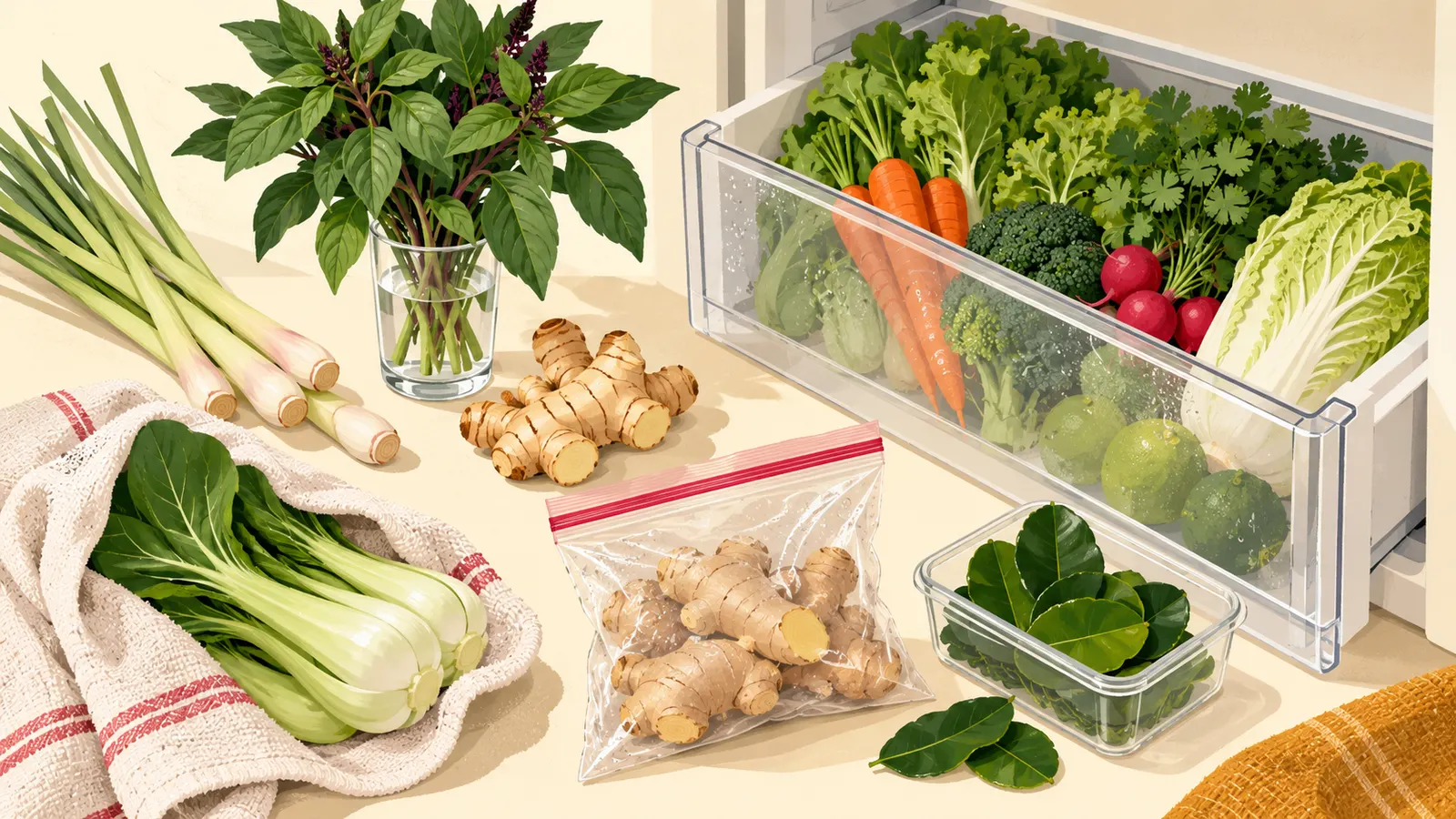
To store lemongrass, wrap the stalks in slightly damp kitchen paper, put them in a bag or lidded box and keep them in the fridge salad drawer, where they last about two weeks. For longer, trim and freeze them whole or sliced: frozen lemongrass keeps its flavour for several months and can be used straight from the freezer.
An Asian supermarket trip usually means buying more herbs and greens than one recipe needs. Handled properly, most keep for one to three weeks, and several freeze far better than you'd expect. Here is how to store each of the common ones, and how to tell when something is past it.
The basic rules for keeping fresh Asian produce
- Keep the fridge at 5°C or below, which is the UK Food Standards Agency's guidance, and use the salad drawer for herbs and greens, where humidity is higher.
- Control moisture: leaves need a little humidity but rot if they sit wet. Damp (not soaking) kitchen paper inside a bag or box is the answer for most herbs.
- Don't wash until you use, except to rinse off obvious soil. Water left on leaves speeds up slime and mould.
- Not everything likes the cold: Thai basil blackens in a cold fridge, and fresh rice noodles turn hard.
- Freeze while it's fresh: the freezer pauses quality, it doesn't restore it. Label every bag with what it is and the date.
- Use-by dates are about safety and apply to chilled foods such as tofu, bean sprouts and fresh noodles. Don't eat them after the use-by date, even if they look and smell fine. You can freeze food up to its use-by date; defrost it in the fridge and use it within 24 hours.
| Ingredient | Fridge | Freezer | How to tell it's past it |
|---|---|---|---|
| Lemongrass | About 2 weeks, wrapped in damp kitchen paper in a bag | Yes: whole or sliced, several months; use from frozen | Dry, grey-brown and brittle, no citrus smell when cut, or mould |
| Galangal | 2 to 3 weeks unpeeled, wrapped in paper in a box | Yes: sliced or whole, several months; slice or grate from frozen | Soft, shrivelled or hollow, mould, or little aroma |
| Fresh ginger | 3 to 4 weeks unpeeled, in a bag in the salad drawer | Yes: whole or in chunks, up to about 6 months; grate from frozen | Soft, wrinkled or spongy, mould, or dry and fibrous inside |
| Kaffir (makrut) lime leaves | 1 to 2 weeks in a sealed bag | Yes, very well: several months; use from frozen | Yellowing, black patches or slimy leaves |
| Thai basil | Prefers room temperature: stems in water for 3 to 5 days | Not whole; freeze chopped in oil for cooking only | Black, slimy or badly wilted leaves |
| Coriander | 1 to 2 weeks with stems in a jar of water, loosely bagged | Chopped, for cooking only; roots freeze well | Yellow or slimy leaves, wilting that water doesn't revive |
| Pak choi and Chinese greens | 3 to 5 days unwashed in a bag in the salad drawer | Only blanched, for soups and braises | Yellow leaves, slimy or brown patches, limp stems |
| Bean sprouts | Until the use-by date; use within a day of opening | Not recommended: they turn limp and watery | Past the use-by date, brown, slimy or a musty, sour smell |
| Fresh rice noodles | Follow the pack; use by the date shown | Possible but the texture suffers | Past the date, sour smell, slimy, or any mould spots |
| Tofu (opened) | Covered in fresh water, changed daily; use within 2 to 3 days or as the pack says | Yes, firm tofu: becomes chewy and spongy | Sour smell, slimy surface, cloudy or yellow water |
How do you store lemongrass, galangal and ginger?
Lemongrass
Choose firm, heavy stalks with a pale, moist base. Wrapped in damp kitchen paper inside a bag, they keep for about two weeks in the fridge. To freeze, trim off the root end and the dry tops, peel away any tough outer layers and freeze the stalks whole, or slice the tender lower part finely and freeze it flat in a bag so you can break off what you need. Frozen lemongrass is easier to slice thinly than fresh, and it keeps well for several months. The tops you trim off are good for infusing stocks, so freeze those too.
Galangal
Yes, you can freeze galangal, and it's the best way to keep it. Fresh galangal lasts two to three weeks in the fridge unpeeled, wrapped in paper inside a box, but it dries out and loses its sharp, piney aroma. Slice it into coins before freezing (it is woody and hard to cut once frozen if left whole) and drop slices straight into soups, curries and pastes. Don't bother peeling young, pinkish galangal; just scrub it.
Fresh ginger
Store fresh ginger unpeeled in a bag or box in the salad drawer and it keeps for three to four weeks. Pick plump, smooth, heavy pieces; wrinkled skin means it's already drying. For the freezer, keep it whole or cut it into thumb-sized chunks. It grates beautifully from frozen on a fine grater, peel and all, and holds for about six months. If a cut end has dried, slice it off; the rest is fine as long as it is firm and mould-free.
How do you keep Thai basil, coriander and lime leaves fresh?
Thai basil
Thai basil is the herb most often ruined in the fridge: the cold blackens the leaves within a day or two. Treat it like cut flowers instead. Trim the stems, stand them in a glass of water at room temperature out of direct sun, loosely cover the leaves with a bag and change the water every day or two; it will last three to five days. If you must refrigerate it, wrap it in dry kitchen paper in a box on the warmest shelf, usually the top one or the door. Whole leaves don't freeze well, but you can blitz the leaves with a little oil, freeze the purée in an ice-cube tray and add the cubes to stir fries and curries.
Coriander
Coriander bought in big bunches from Asian grocers often comes with roots attached, which helps it last. Snip off any rubber band, pick out yellow or slimy stems, and stand the bunch in a jar with a few centimetres of water. Cover the leaves loosely with a bag and keep it in the fridge; it will last one to two weeks. Alternatively, roll it in damp kitchen paper inside a box. Frozen coriander loses its texture, so freeze it chopped only for cooking, not for garnishing. The roots, which Thai cooks pound into curry pastes, freeze perfectly: scrub, dry and bag them.
Kaffir (makrut) lime leaves
Freezing kaffir lime leaves is the easiest win in this guide. They are tough, waxy leaves that keep their fragrance in the freezer for several months and need no defrosting: tear or shred them straight into the pan. Fresh, they last a week or two in a sealed bag in the fridge. Buy a big pack, keep a few in the fridge and freeze the rest flat in a bag. They are increasingly labelled makrut lime leaves, and are the same thing.
How do you store pak choi and bean sprouts?
Pak choi and other Chinese greens
Keep pak choi, choi sum and gai lan unwashed in a loosely closed bag in the salad drawer and use them within three to five days; baby pak choi goes faster than large heads. If they wilt, standing the stems in cold water for 20 minutes perks them up. Raw greens don't freeze well, but you can blanch them for a minute, plunge them into iced water, squeeze dry and freeze them for soups, noodle broths and braises. Wash them well just before cooking: grit collects at the base of the stems, so separate the leaves first.
Bean sprouts
Bean sprouts are the most perishable item on this list and the one to be strict about. Keep them sealed in the coldest part of the fridge, use them by the use-by date and ideally within a day of opening. UK food safety guidance is to cook bean sprouts thoroughly until steaming hot throughout unless the pack says they are ready to eat, so add them early enough in a stir fry to heat through properly. Any that are brown, slimy or smell sour should go straight in the bin.
How do you store fresh rice noodles and opened tofu?
Fresh rice noodles
Fresh flat rice noodles (ho fun) and rolls have a very short life. Follow the storage instructions on the pack and use them by the date shown. Some are sold unrefrigerated and meant to be eaten within a day or two of purchase; if the label says keep refrigerated, do so, but expect them to harden and stick together in the cold. To revive them, warm the pack briefly in the microwave or pour hot water over them, then separate the strands gently before stir-frying. Freezing is possible, but they tend to break up once thawed.
Tofu once opened
Before opening, chilled tofu follows its use-by date. Once opened, put leftovers in a lidded box, cover with fresh cold water, refrigerate and change the water every day, using it within two to three days or within the time the pack gives. Firm tofu freezes well, though freezing changes it: thawed tofu becomes chewier and more spongy, so it soaks up marinades and sauces brilliantly. Silken tofu doesn't freeze well. Bin tofu that smells sour or feels slimy.
Where to buy fresh Asian herbs and vegetables
Fresh lemongrass, galangal, Thai basil and lime leaves are easiest to find at Thai grocers and Vietnamese grocers, while Chinese supermarkets are best for pak choi, choi sum, gai lan and fresh noodles. 245 stores in our directory say they sell fresh produce, and 13 specifically mention fresh herbs. Start with Thai groceries in London, Thai groceries in Edinburgh, Thai groceries in Birmingham, Vietnamese groceries in London and Vietnamese groceries in Nottingham, or check Manchester and London for the widest choice. Deliveries of fresh produce often arrive on set days, so it's worth asking your local shop when theirs comes in.
Putting your haul to use: frozen lemongrass, galangal and lime leaves go straight into homemade pastes in our Thai curry pastes guide, and Chinese greens are at their best in a quick wok (affiliate link, opens in a new tab) dish from our guide to how to stir fry at home.