
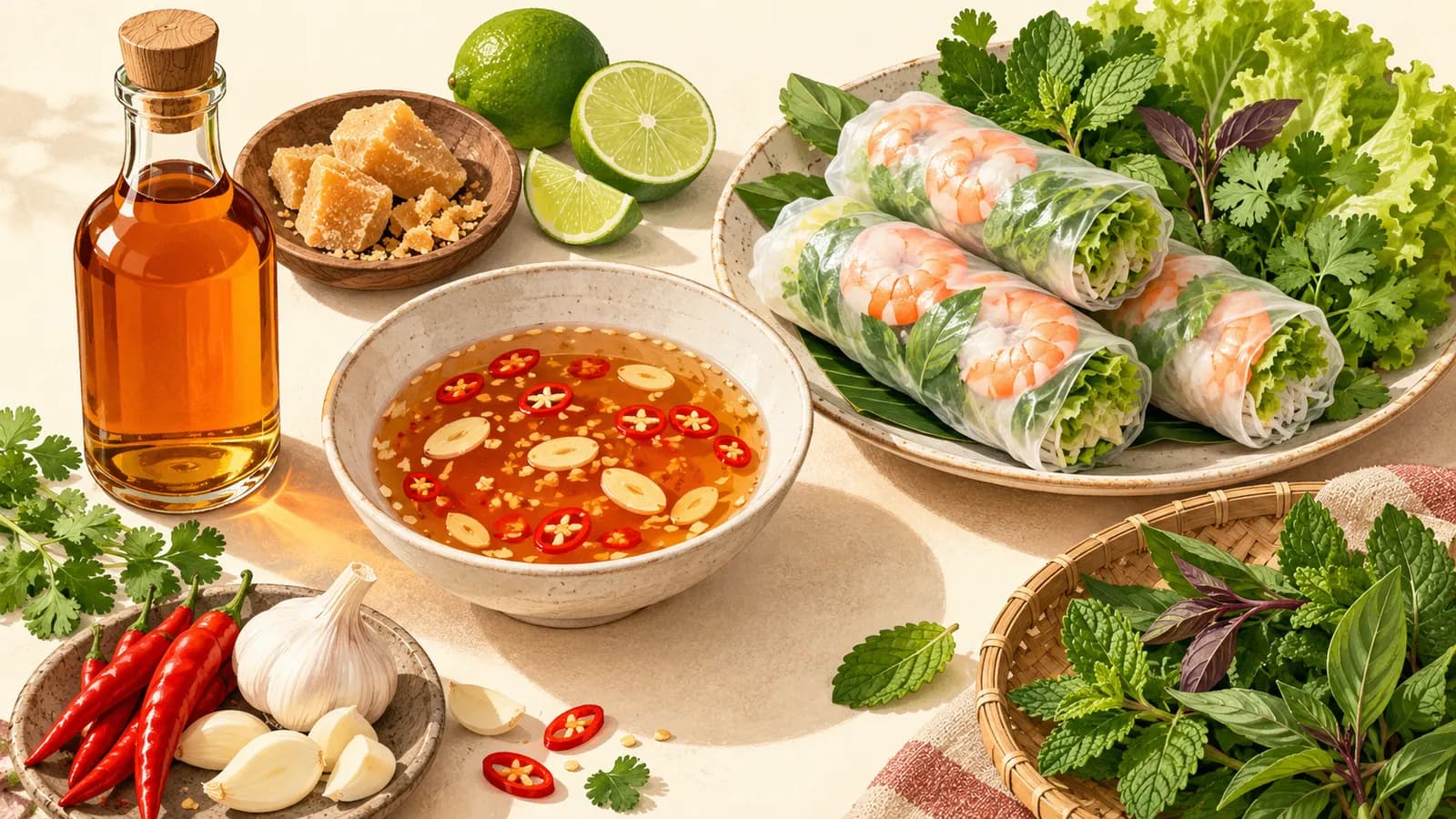
Use fish sauce like liquid salt with extra savoury depth: a teaspoon or two stirred into stir-fries, curries, soups and dressings near the end of cooking, or mixed with lime, sugar, garlic and chilli to make a dipping sauce. It smells fierce in the bottle, but once it meets heat, acid or sugar the fishiness fades and leaves a rounded, meaty saltiness behind.
It is the backbone of Thai, Vietnamese, Lao, Cambodian and Filipino cooking, and once you have a good bottle you will find yourself reaching for it in shepherd's pie and tomato sauce as well as pad thai. This guide covers what fish sauce is, how to choose a bottle, how to cook with it, and what to use if you run out.
What is fish sauce?
Fish sauce is the liquid drained from small fish, usually anchovies, that have been layered with salt and left to ferment for many months, often a year or more. The fish break down into a clear, amber, intensely savoury liquid. A good one has only two or three ingredients on the label: anchovy, salt and sometimes sugar.
- Nam pla (น้ำปลา): Thai fish sauce, used mainly as a cooking seasoning and in salads such as som tam and larb.
- Nước mắm: Vietnamese fish sauce, the base of nước chấm and the seasoning in phở broth, caramelised kho dishes and marinades.
- Patis: the Filipino version, often a little lighter, used in soups such as sinigang and tinola and at the table.
- Tuk trey and nam pa: Cambodian and Lao fish sauces, which you may spot at specialist grocers.
Thai vs Vietnamese fish sauce: nam pla vs nước mắm
Both are made the same way, and the differences between brands are bigger than the differences between countries. In broad terms, Thai nam pla tends to taste saltier and sharper and is used mostly in cooking, while Vietnamese nước mắm is often rounder and a little sweeter, because it is so often served raw in dipping sauces. Phú Quốc island and Phan Thiết are the best-known Vietnamese fish sauce regions, and you will see both names on labels.
| Style | What to look for | Flavour | Best for |
|---|---|---|---|
| Thai nam pla | "Nam pla" on the label, anchovy and salt, often sugar | Salty, sharp, punchy | Stir-fries, curries, som tam, larb |
| Vietnamese nước mắm | "Nước mắm", often a °N number on the label | Rounder, slightly sweet finish | Dipping sauces, marinades, phở, kho dishes |
| Premium first press | "Nhĩ" or "first press", 40°N or higher | Deep, almost meaty, less harsh | Raw uses: nước chấm, dressings, finishing |
| Filipino patis | "Patis" | Lighter and milder | Soups, stews, table seasoning |
| Ready-mixed dipping sauce | "Nước mắm pha" or "nước chấm" | Sweet, sour and salty, already diluted | Spring rolls when you are short of time |
What do first press and 40°N mean?
First press means the liquid that drains from the fermenting barrel first, before the fish are steeped again in brine to draw out later, lighter pressings. It is the most concentrated and most expensive. The Vietnamese term is nhĩ.
The °N figure (degrees nitrogen) on many Vietnamese bottles measures how much protein-derived nitrogen is in the sauce, in grams per litre. A higher number means a richer, more savoury sauce, not a saltier one. Around 40°N is generally treated as the mark of a premium bottle. Save those for raw uses where you will taste the difference, and use a cheaper everyday bottle for cooking, where heat flattens the nuances anyway.
How to read the label
- Shortest ingredient list wins: anchovy and salt, with or without sugar.
- Some cheaper bottles add water, hydrolysed protein, flavour enhancers or colouring. They work, but taste flatter and harsher.
- Colour should be clear amber to reddish brown, not murky.
- Glass bottles keep the flavour better than plastic over a long time in the cupboard.
How to use fish sauce in cooking
Think of fish sauce as seasoning, not an ingredient you taste on its own. It is roughly as salty as soy sauce but adds a deeper, rounder savouriness, and it pairs best with something sour (lime, tamarind), something sweet (palm sugar, caramel) and something hot (chilli). Start with less than you think, taste, then add more a few drops at a time.
In hot dishes
- Stir-fries: add a teaspoon or two in the last minute, splashed around the edge of a hot wok (affiliate link, opens in a new tab) so it sizzles and caramelises slightly. See our stir-fry guide for the rest of the technique.
- Curries: season Thai curries with fish sauce at the end, after the coconut milk has simmered, balancing it against palm sugar. Our Thai curry paste guide shows how.
- Soups and broths: phở and Thai clear soups are seasoned with fish sauce off the heat or just before serving, so the aroma stays fresh.
- Caramel and kho dishes: Vietnamese braised pork or fish is cooked in a dark caramel with fish sauce, which turns sticky, bittersweet and savoury.
- Marinades: a tablespoon with garlic, sugar, shallot and a little oil is enough for 500g of pork or chicken for grilling.
Raw: dressings and dips
Uncooked fish sauce is where quality shows. Thai salad dressings are a simple mix of fish sauce, lime juice, sugar and chilli, adjusted until sour, salty, sweet and hot are all present at once. Nam pla prik, sliced bird's eye chillies in fish sauce with a squeeze of lime, sits on almost every Thai table for diners to season their own rice and noodles.
In everyday British cooking
Used in small amounts, fish sauce disappears into the dish and simply makes it taste more savoury. Try half a teaspoon in a bolognese or tomato sauce, a few drops in a Caesar dressing instead of anchovies, a splash in gravy, or a teaspoon tossed with roast squash or Brussels sprouts and a squeeze of lemon.
Does fish sauce go off?
Fish sauce is so salty that it keeps for a long time and is very unlikely to spoil. It does change, though. Once opened it slowly darkens and the flavour becomes stronger and fishier as it oxidises. That is a quality issue, not a safety one, but a fresh bottle tastes noticeably cleaner.
- Unopened, keep it in a cool, dark cupboard and go by the best-before date.
- Once opened, the cupboard is fine, but the fridge keeps the colour and flavour brighter for longer. Aim to use it within about a year for the best taste.
- Salt crystals at the bottom of the bottle are normal and harmless.
- Wipe the neck before closing. Dried drips around the cap are the main source of the smell in your cupboard.
- If it smells off in a way that is different from usual, or shows mould, throw it out.
Fish sauce substitutes
Nothing tastes exactly the same, but these get you close enough for cooking. Swap like for like and adjust to taste:
- Light soy sauce with a little lime juice: the easiest swap for stir-fries and curries. Use slightly less, because some soy sauces are saltier. Our light vs dark soy sauce guide explains which one to reach for.
- Mashed anchovy fillets with a splash of soy: closest in flavour for dressings and pasta sauces.
- Worcestershire sauce: contains anchovies and works in marinades, though it is sweeter and spicier, so use it sparingly.
- Colatura di alici: Italian anchovy sauce made in a similar way, a near match where you can find it.
- Vegetarian and vegan: light soy or mushroom soy sauce mixed with a pinch of crumbled dried seaweed, or a vegan fish sauce from an Asian supermarket. For nước chấm, use light soy and add a little extra lime and sugar.
Nước chấm: Vietnamese dipping sauce
If you make one thing with fish sauce, make this. Nước chấm is the sweet, sour, salty and garlicky dip served with spring rolls, bún chả and grilled meats, and spooned over noodle salads. It takes ten minutes, and getting the balance right teaches you how fish sauce works. A good batch should taste bright and sweet-sour first, with the savouriness coming through afterwards; it should never taste of raw fish.
Recipe
Nước chấm (Vietnamese dipping sauce)
A balanced sweet, sour, salty and garlicky fish sauce dip for spring rolls, bún chả, grilled meat and rice noodle salads. Ready in ten minutes.
- Serves
- About 250ml (4–6 people as a dip)
- Prep
- 10 min
- Cook
- 0 min
- Total
- 10 min
Ingredients
- 120ml warm water
- 3 tbsp caster sugar (or grated palm sugar)
- 3 tbsp fish sauce
- 3 tbsp lime juice (about 2 limes)
- 1 tsp rice vinegar (optional, for extra tang)
- 2 garlic cloves, very finely chopped
- 1–2 red bird's eye chillies, thinly sliced
- 1 small carrot, finely shredded (optional)
Method
- 1Stir the sugar into the warm water until it has completely dissolved. Undissolved sugar makes the sauce taste flat at first and sickly at the end.
- 2Add the fish sauce, lime juice and rice vinegar, if using, and stir well.
- 3Taste on a piece of lettuce or cucumber rather than from the spoon. It should be sweet and sour first with a salty, savoury finish. Add more lime if it is too sweet, more sugar or water if it is too sharp or salty, or a few drops of fish sauce if it tastes thin.
- 4Stir in the garlic, chilli and carrot last. Added after the sugar has dissolved, they float on the surface the way they do in Vietnamese restaurants.
- 5Leave for 10 minutes so the garlic and chilli flavour the sauce, then serve in small bowls for dipping or spoon over noodle salads.
- 6Keep leftovers in a sealed jar in the fridge for up to 3 days. The garlic gets stronger over time.
Stock your pantry
Fish sauce, plus a mortar for pounding the garlic and chilli for nước chấm.
- Fish sauceLook for a short ingredient list: anchovies, salt and maybe sugar.See options on Amazon (affiliate link, opens in a new tab)
- Granite mortar and pestlePounds lemongrass, chillies and garlic into a paste far better than a blender for small amounts.See options on Amazon (affiliate link, opens in a new tab)
Some links on this page are affiliate links: if you buy through them we may earn a small commission, at no extra cost to you. It never affects which shops we list. How we make money.
Where to buy fish sauce in the UK
Most UK supermarkets sell one or two bottles, but an Asian grocer will have a whole shelf, including first-press Vietnamese sauces, larger bottles that cost far less per millilitre, and patis. In our directory, 46 stores stock Vietnamese groceries and 98 stores stock Thai groceries, and almost any of them will carry fish sauce.
Vietnamese specialists include Ha-Noi Supermarket in London and Vinh supermarket in Leeds, which also stocks Korean, Japanese and Malaysian groceries. For Thai nam pla alongside curry pastes and fresh herbs, try Nara Thai Store in Birmingham or Nong Fern Thai Supermarket in Leeds.
Vietnamese and Thai groceries by city
- Vietnamese groceries in London16 stores
- Vietnamese groceries in Nottingham3 stores
- Thai groceries in London17 stores
- Thai groceries in Edinburgh4 stores
- Thai groceries in Birmingham3 stores
- Thai groceries in Glasgow7 stores
- Thai groceries in Cambridge3 stores
- Thai groceries in Nottingham4 stores
- Thai groceries in Oxford3 stores
- Thai groceries in Canterbury3 stores