
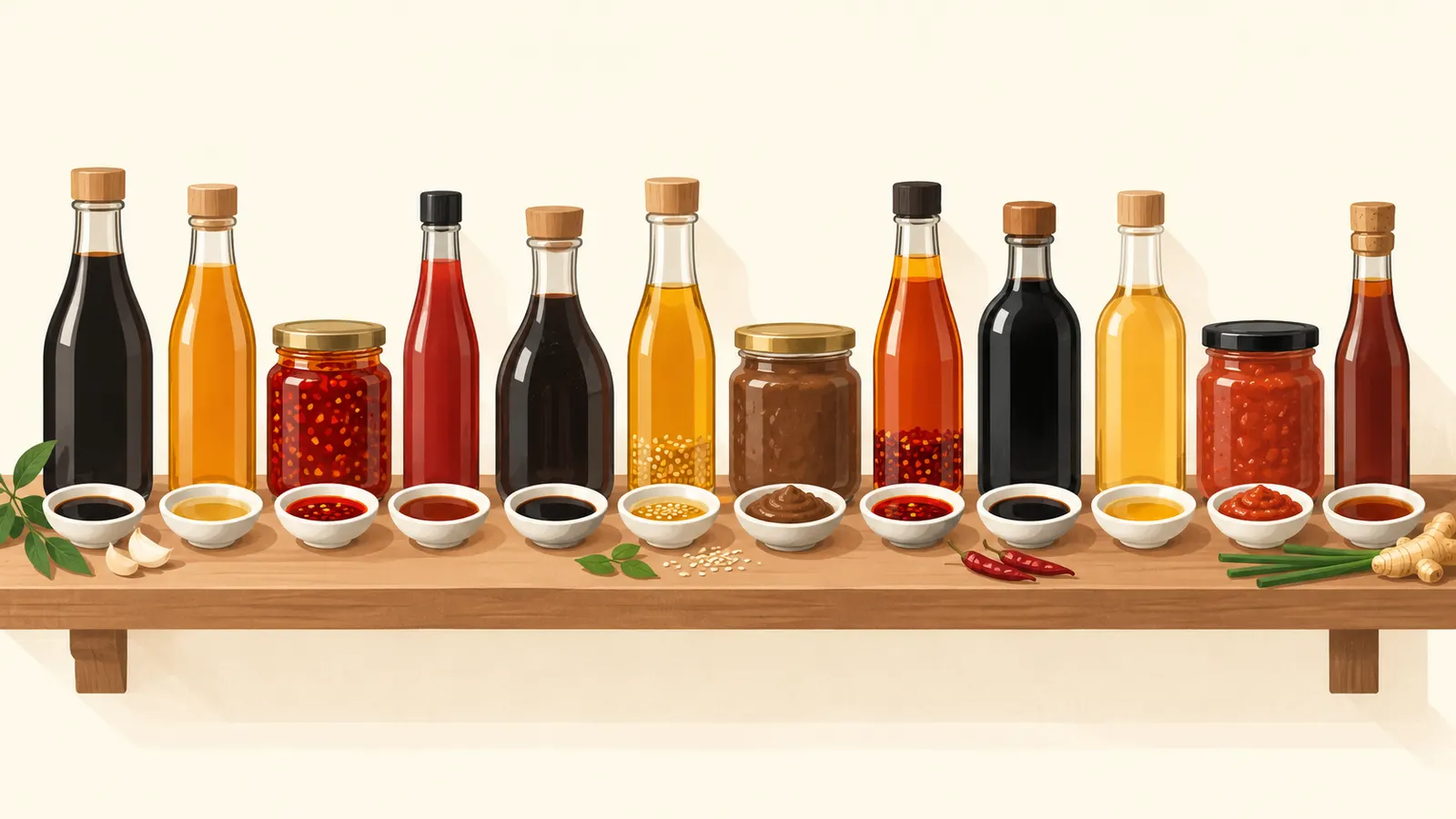
The Chinese pantry essentials are light soy sauce, dark soy sauce, oyster sauce, Shaoxing rice wine, toasted sesame oil and Chinkiang black vinegar. Add hoisin, doubanjiang, chilli oil, fermented black beans, rice vinegar and sesame paste and you can cook most of a Chinese takeaway menu at home, plus plenty of regional dishes you will not find on one.
None of these is expensive and most keep for months, but a Chinese supermarket's sauce aisle can be overwhelming. Here is what each one tastes like, what to cook with it, how to store it and what to swap, plus the first five to buy and a batch stir-fry sauce that lives in the fridge.
Chinese sauces at a glance
| Sauce | Flavour | Use it for | Keep in |
|---|---|---|---|
| Light soy sauce (生抽) | Salty, savoury | Seasoning almost everything | Cupboard |
| Dark soy sauce (老抽) | Mellow, slightly sweet | Colour in noodles and braises | Cupboard |
| Oyster sauce (蚝油) | Savoury-sweet, rich | Stir-fries, greens, glazes | Fridge |
| Hoisin sauce (海鲜酱) | Sweet, garlicky, spiced | Duck pancakes, char siu, glazes | Fridge |
| Shaoxing wine (绍兴酒) | Nutty, sherry-like | Marinades, stir-fries, braises | Cupboard |
| Chinkiang black vinegar (镇江香醋) | Malty, mellow, tart | Dumpling dips, cold dishes, sour soups | Cupboard |
| Rice vinegar (米醋) | Clean, sharp | Pickles, sweet and sour, dressings | Cupboard |
| Toasted sesame oil (麻油) | Nutty, toasty | Finishing dishes, dressings | Cool, dark cupboard |
| Doubanjiang (豆瓣酱) | Salty, fermented, spicy | Mapo tofu, twice-cooked pork | Fridge |
| Chilli oil and chilli crisp | Fragrant heat, crunch | Noodles, dumplings, eggs | Cupboard (check label) |
| Fermented black beans (豆豉) | Intensely salty, savoury | Black bean sauce, steamed ribs | Airtight jar |
| Chinese sesame paste (芝麻酱) | Deeply nutty, rich | Dan dan and cold noodles, hotpot dips | Cupboard or fridge |
The 12 Chinese sauces and condiments explained
Light soy sauce (生抽)
The everyday seasoning: thin, salty and savoury. If a recipe just says soy sauce, it means this. Use it by the tablespoon in sauces and marinades and splash it into dressings and dips.
Dark soy sauce (老抽)
Thicker, darker and less sharply salty, used a teaspoon at a time to give noodles, fried rice and braises their deep brown colour. Our light vs dark soy sauce guide covers both in detail, along with tamari, Japanese shoyu and kecap manis.
Oyster sauce (蚝油)
What is oyster sauce? A thick, glossy brown sauce made from oyster extract, sugar and salt, thickened with starch. It does not taste fishy: think savoury, gently sweet and rich, with a silky texture that coats food. It is the backbone of beef and broccoli and of Cantonese blanched greens. Add it towards the end of a stir-fry, about 1–2 tbsp for two people. Vegetarian versions made from mushrooms are widely available. Refrigerate after opening.
Hoisin sauce (海鲜酱)
A thick, dark, sweet sauce made from fermented soybeans, sugar, garlic, vinegar and spices. The Chinese name means seafood sauce, but it contains no seafood. It is the sauce spread on pancakes with crispy duck, a key part of char siu marinade, and a quick glaze for ribs, chicken wings or salmon. It is sweet and burns easily, so add it in the last few minutes of cooking or loosen it with water. Refrigerate after opening.
Shaoxing wine (绍兴酒)
An amber rice wine from Shaoxing in Zhejiang province, with a nutty, slightly sweet flavour similar to medium-dry sherry. A tablespoon in a marinade, or a splash around the hot edge of the wok (affiliate link, opens in a new tab), gives that restaurant aroma. Bottles sold for cooking usually have salt added, so they are not for drinking. It keeps for a long time in the cupboard.
Chinkiang black vinegar (镇江香醋)
A dark, aged vinegar from Zhenjiang in Jiangsu province, made from glutinous rice and malted grain. It is far mellower than malt or wine vinegar: tart, malty, slightly sweet and a little smoky. Mix it with fine shreds of ginger for a classic dumpling dip, or add a spoonful to hot and sour soup or smacked cucumber salad. It is one of the condiments in our dumpling night pantry.
Rice vinegar (米醋)
Clear or pale gold, clean and sharp. Chinese white rice vinegar is usually more acidic than Japanese rice vinegar, so taste before you pour. Use it for quick pickles, sweet and sour sauce and dressings.
Toasted sesame oil (麻油)
Pressed from toasted sesame seeds, it is dark amber and intensely nutty. Treat it as a seasoning, not a cooking oil: add a few drops to 1 tsp at the end of cooking or into dressings. Keep it cool and dark, as it turns rancid faster than most oils.
Doubanjiang (豆瓣酱)
What is doubanjiang? A Sichuan chilli bean paste made from fermented broad beans, chillies and salt, aged until deep reddish-brown. Versions from Pixian (郫县) are the most prized. It is salty, savoury and spicy rather than fiercely hot, and must be fried first: stir 1–2 tbsp into hot oil over a medium-low heat until the oil turns red. It is essential in mapo tofu and twice-cooked pork. Cut back on soy sauce when you use it, and keep it in the fridge once opened.
Chilli oil and chilli crisp (辣椒油)
Chilli oil is neutral oil poured hot over chilli flakes and spices, giving fragrant red oil with a sediment of flakes at the bottom. Chilli crisp adds crunchy fried bits such as garlic, shallots and soybeans, so it is more of a topping. Spoon either over noodles, dumplings, eggs or rice. Check the label for storage: many are fine in the cupboard, but those with fresh garlic or onion should be refrigerated.
Fermented black beans (豆豉)
Black soybeans that have been salted and fermented until soft, wrinkled and intensely savoury. Rinse a tablespoon briefly, then roughly chop or crush with garlic before frying to make your own black bean sauce for beef and peppers, steamed spare ribs or clams. They keep for months in an airtight jar. Jarred black bean sauce is sweeter and less punchy.
Chinese sesame paste (芝麻酱)
Made from well-toasted sesame seeds, it is darker, thicker and much nuttier than tahini. Stir in the separated oil, then loosen with warm water, soy and vinegar for dan dan noodles, cold noodles or a hotpot dip. In a pinch, use tahini with a few drops of toasted sesame oil. Keep it in the cupboard, or the fridge if it takes you a while to finish.
Shaoxing wine substitutes and other swaps
- Shaoxing wine: dry or medium-dry sherry is the closest swap, 1:1. Dry white vermouth or Japanese cooking sake also work. For an alcohol-free version, use the same amount of unsalted chicken or vegetable stock with a few drops of rice vinegar.
- Chinkiang black vinegar: mix 2 parts rice vinegar or cider vinegar with 1 part balsamic, or use malt vinegar with a pinch of sugar.
- Oyster sauce: mushroom vegetarian stir-fry sauce, or light soy with a pinch of sugar and a little cornflour to thicken.
- Doubanjiang: there is no real substitute for its fermented depth. Miso with chilli flakes or chilli bean sauce gets you part of the way; gochujang is sweeter and works differently (see our gochujang guide).
Chinese pantry essentials: the first 5 to buy
- Light soy sauce: the salt of Chinese cooking. Buy a large bottle; you will get through it.
- Oyster sauce: instant body and gloss for stir-fries and greens.
- Shaoxing wine: the aroma that makes home stir-fries taste like a restaurant's.
- Toasted sesame oil: a few drops finish almost anything.
- Chinkiang black vinegar: dipping sauces, cold dishes and a sour lift for soups.
Next, add dark soy for colour and doubanjiang or chilli oil for heat, then the rest as recipes call for them. Keep cornflour, ground white pepper and jasmine rice alongside (our rice guide explains how to cook it).
How to store Chinese sauces
- Cupboard: soy sauces, Shaoxing wine, vinegars and most chilli oils are preserved by salt, alcohol or acid. Keep them away from the hob, where heat dulls the flavour.
- Fridge after opening: oyster sauce, hoisin, doubanjiang and anything thick and sweet. Always follow the label if it says otherwise.
- Cool and dark: sesame oil and sesame paste go rancid in warm, bright kitchens. Sniff before using; stale sesame smells like old paint.
Recipe: all-purpose Chinese stir-fry sauce
This jar turns the pantry into weeknight dinners: five of the sauces above in a balanced mix of salty, sweet, savoury and sour, ready to shake and pour. Our stir-fry guide explains how to get the wok hot enough to make the most of it.
Recipe
All-purpose Chinese stir-fry sauce
A batch of balanced soy, oyster and Shaoxing sauce that keeps in the fridge for up to two weeks. Use 4 tbsp per stir-fry for two with chicken, beef, prawns, tofu or vegetables.
- Serves
- About 350ml (6–8 stir-fries for two)
- Prep
- 5 min
- Cook
- 3 min
- Total
- 8 min
Ingredients
- 100ml light soy sauce
- 60ml oyster sauce (or vegetarian mushroom stir-fry sauce)
- 60ml Shaoxing wine
- 2 tbsp dark soy sauce
- 2 tbsp light brown or caster sugar
- 1 tbsp Chinkiang black vinegar or rice vinegar
- 2 tsp toasted sesame oil
- ½ tsp ground white pepper
- 100ml water
- To use: 1 tsp cornflour per 4 tbsp sauce
Method
- 1Put the Shaoxing wine and sugar in a small saucepan and warm over a low heat for 2–3 minutes, stirring, until the sugar dissolves and the wine just starts to simmer. Take off the heat.
- 2Stir in the light soy, oyster sauce, dark soy, vinegar, sesame oil, white pepper and water until smooth.
- 3Leave to cool, then pour into a clean jar or bottle with a tight lid. Label with the date and keep in the fridge for up to two weeks.
- 4To use, shake the jar, then mix 4 tbsp of sauce with 1 tsp cornflour in a small bowl for each stir-fry for two people.
- 5Stir-fry your garlic, ginger, protein and vegetables in a very hot wok. Stir the sauce again to lift the cornflour, pour it around the edge of the wok and toss for 30–60 seconds until it bubbles, thickens and coats everything. Taste and add a splash of water if it is too thick or too salty.
Ways to use it
- Chicken and cashews: 300g sliced chicken thigh, a handful of roasted cashews, peppers and spring onions.
- Beef and broccoli: velvet 250g sliced beef in cornflour and a little sauce, then stir-fry with blanched broccoli.
- Garlic greens: blanch pak choi or choi sum, then toss in a hot wok with garlic and 2 tbsp of sauce.
Stock your pantry
The starter set from this guide, in the order we'd buy them.
- Oyster sauceSavoury, glossy depth for stir-fries and greens.See options on Amazon (affiliate link, opens in a new tab)
- Shaoxing rice wineThe cooking wine behind restaurant-style stir-fries and braises.See options on Amazon (affiliate link, opens in a new tab)
- Doubanjiang (chilli bean paste)The base of mapo tofu and many Sichuan dishes.See options on Amazon (affiliate link, opens in a new tab)
- Chilli crispCrunchy chilli in oil for noodles, eggs and dumplings.See options on Amazon (affiliate link, opens in a new tab)
Some links on this page are affiliate links: if you buy through them we may earn a small commission, at no extra cost to you. It never affects which shops we list. How we make money.
Where to buy Chinese sauces in the UK
Most supermarkets carry soy, oyster and hoisin sauce, but for Chinkiang vinegar, doubanjiang, fermented black beans, sesame paste and the bigger, cheaper bottles you need a Chinese grocer. Our directory lists 259 stores that stock Chinese groceries, 185 of them Chinese specialists, with the most in London, Edinburgh, Birmingham and Manchester.
For the widest range of regional sauces, try the large Chinese supermarkets: SeeWoo and Loon Fung Chinatown in London's Chinatown, Wing Yip Superstore Birmingham, W.H. Lung Supermarket in Manchester and Sida Chinese Supermarket in Liverpool. Our London guide groups every London shop by area.
Chinese groceries by city
- Chinese groceries in London45 stores
- Chinese groceries in Edinburgh11 stores
- Chinese groceries in Birmingham9 stores
- Chinese groceries in Manchester9 stores
- Chinese groceries in Glasgow7 stores
- Chinese groceries in Liverpool7 stores
- Chinese groceries in Cambridge6 stores
- Chinese groceries in Cardiff6 stores