
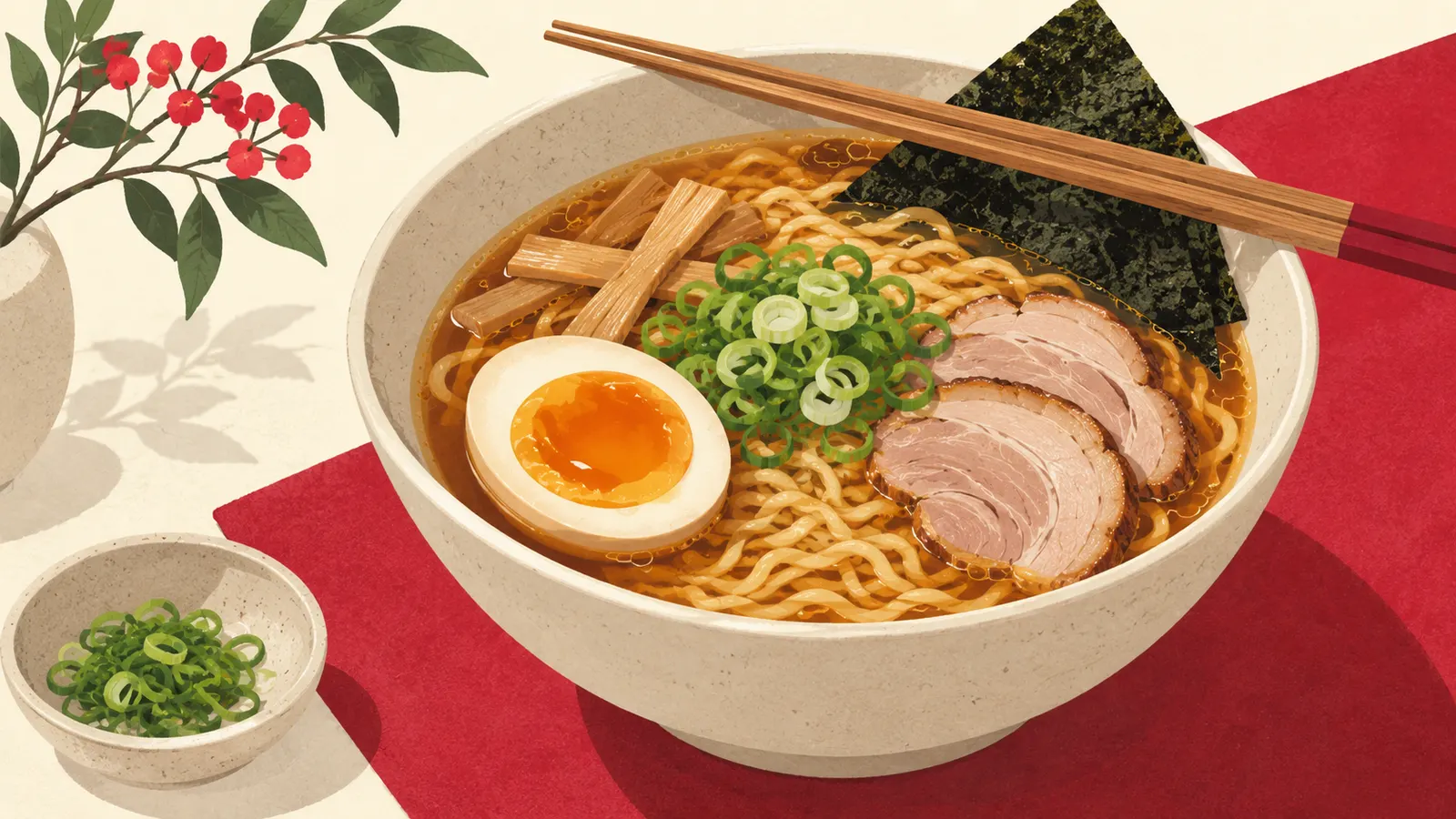
To make ramen at home, build the bowl from four parts: a hot savoury broth, a salty seasoning concentrate called tare spooned into the bottom of the bowl, springy alkaline noodles cooked separately, and toppings such as a marinated soft-boiled egg. A quick weeknight version simmers good chicken stock with ginger, garlic and kombu for 20 minutes and takes about half an hour from start to finish.
Ramen shops spend days on their broths, but you don't need to for a satisfying bowl at home. This guide explains the main ramen styles, what tare does, how to make jammy ramen eggs, which noodles to buy and how to upgrade instant noodles. The recipe is a 30-minute shoyu (soy sauce) ramen; the eggs marinate overnight, so start them the day before.
What are the main types of ramen broth?
Ramen styles are usually named after either the tare or the broth. Shoyu, shio and miso describe the seasoning; tonkotsu describes the broth itself. Most broths are made from chicken, pork or a mix, sometimes with dashi from kombu and dried fish for extra depth.
| Style | What defines it | Broth | Flavour | Home difficulty |
|---|---|---|---|---|
| Shoyu (醤油) | Soy sauce tare | Clear chicken or chicken and pork, often with dashi | Savoury, rounded, lightly sweet | Easy: the best place to start |
| Shio (塩) | Salt tare | Very clear, light chicken or seafood broth | Clean and delicate; shows off the broth | Easy, but needs a good stock |
| Miso (味噌) | Miso tare | Chicken or pork, often with garlic, ginger and sesame | Rich, nutty, warming | Easy |
| Tonkotsu (豚骨) | Pork bone broth boiled hard for hours | Cloudy and creamy from emulsified fat and collagen | Deep, porky, rich | Hard: 8 to 12 hours of boiling |
For a first attempt at home, shoyu or miso ramen gives the best result for the least effort. Shio depends on a really well-made stock, and tonkotsu is a weekend project: pork bones and trotters kept at a rolling boil for most of a day. If you want miso ramen, our miso guide explains which paste to use; mixed or red miso stands up best to a rich broth.
What is tare in ramen?
Tare (たれ, pronounced ta-reh) is the concentrated seasoning that goes into each bowl before the broth. The broth itself is usually left almost unsalted; the tare supplies the salt and most of the character. That's why a ramen shop can serve shoyu, shio and miso ramen from the same pot of stock. At home this is useful too, because you can season each bowl to taste and keep leftover broth unsalted for other dishes.
- Shoyu tare: Japanese soy sauce simmered briefly with mirin and sake, sometimes with kombu, dried shiitake or a little sugar. Our soy sauce guide explains how Japanese soy sauce compares with Chinese light and dark soy; a standard Japanese soy sauce is the one to use here.
- Shio tare: salt dissolved in sake, mirin and a little dashi or kombu water. Use about 1 tsp fine salt per bowl, plus a splash of fish sauce or a pinch of MSG if you like.
- Miso tare: miso paste mixed with garlic, ginger, sesame paste, a little soy sauce and mirin. Use 1½ to 2 tbsp per bowl and whisk it in well.
- How much: start with 2 tbsp tare per 400ml of broth, stir, taste, then add more a teaspoon at a time. Ramen broth should taste a touch saltier than soup, because the noodles absorb some of it.
How to make ramen eggs (ajitama)
Ajitsuke tamago, shortened to ajitama, are soft-boiled eggs with set whites and jammy yolks, marinated in a sweet soy mixture until the whites turn amber. They are the topping most people miss when making ramen at home, and they are simple once you have the timing right.
- Bring a pan of water to a rolling boil. Lower in large eggs straight from the fridge with a spoon and set a timer for 6½ minutes for a jammy yolk, or 7 minutes for a firmer one.
- Lift them straight into a bowl of iced water and leave for 5 minutes. This stops the cooking and makes them easier to peel.
- Peel carefully under water, starting from the wide end where the air pocket is.
- Mix 3 tbsp soy sauce, 2 tbsp mirin, 1 tsp sugar and 100ml water. Put the eggs in a small food bag or a narrow container so the marinade covers them, and refrigerate for at least 6 hours, ideally overnight.
- Take them out of the marinade after about 24 hours, or they turn salty and the yolks firm up. Keep them in the fridge and eat within two days.
The Food Standards Agency's advice is that hen eggs produced under the British Lion scheme can be eaten runny or lightly cooked by most people, including pregnant women. For other eggs, or if in doubt, boil for 9 to 10 minutes until the yolk is fully set.
Fresh vs dried ramen noodles: which should you buy?
Ramen noodles are wheat noodles made with kansui, an alkaline mineral water. The alkalinity is what makes them yellow, springy and slightly firm to the bite, and what stops them going limp in hot broth. Without it, you have something closer to spaghetti.
- Fresh or frozen ramen: the best texture. Look for them in the chiller or freezer of Japanese and Asian grocers, usually in single-portion packs of about 120 to 150g. They cook in 1 to 2 minutes and frozen ones go straight into the water.
- Dried ramen: keeps for months and is a good cupboard standby. Wavy or straight nests of about 80g per portion, cooking in 3 to 5 minutes.
- Instant ramen: pre-fried or air-dried noodle blocks. Fine for a quick bowl, especially upgraded with the ideas below, but softer.
- In a pinch: spaghetti boiled with 1 tbsp bicarbonate of soda per 2 litres of water becomes noticeably springier and more ramen-like. Watch the pan, as it foams up.
Always cook ramen noodles in a separate large pan of unsalted boiling water, never in the broth: they release starch that would make the broth cloudy and gluey. Cook them slightly under the packet time, because they keep softening in the hot bowl. For more on other noodle types, see our guide to Asian noodles.
Recipe: 30-minute shoyu ramen with ramen eggs
This quick shoyu ramen infuses shop-bought chicken stock with kombu, dried shiitake, ginger and garlic, then seasons it with a simple soy tare. If you have homemade dashi, replace a quarter of the stock with it for a deeper, more Japanese flavour. The eggs are marinated the day before; everything else takes about 30 minutes.
Recipe
30-minute shoyu ramen with ramen eggs
Quick shoyu ramen: chicken stock infused with kombu, shiitake, ginger and garlic, seasoned with soy tare and topped with jammy marinated eggs. Marinate the eggs the night before.
- Serves
- 2 people
- Prep
- 10 min
- Cook
- 20 min
- Total
- 30 min
Ingredients
- 2 large eggs
- Egg marinade: 3 tbsp soy sauce, 2 tbsp mirin, 1 tsp sugar and 100ml water
- 1 litre low-salt chicken stock
- 1 piece kombu, about 10cm square (optional)
- 2 dried shiitake mushrooms
- 3cm piece fresh ginger, sliced
- 2 garlic cloves, lightly crushed
- 3 spring onions, whites and greens separated
- 4 tbsp Japanese soy sauce
- 1 tbsp mirin
- 1 tbsp sake (or 1 more tbsp mirin)
- ½ tsp caster sugar
- 2 portions fresh ramen noodles (about 250g) or 160g dried
- 150g cooked chicken or pork, sliced
- 2 handfuls of spinach or beansprouts
- 1 sheet nori, cut into quarters
- 2 tsp toasted sesame oil or chilli oil
Method
- 1The day before, boil the eggs for 6½ minutes, chill them in iced water, peel, and leave them in the egg marinade in the fridge overnight.
- 2Put the stock, kombu, shiitake, ginger, garlic and spring onion whites in a saucepan over a medium heat. Lift out the kombu as soon as small bubbles appear, then simmer gently, uncovered, for 20 minutes.
- 3Meanwhile, make the tare: put the 4 tbsp soy sauce, mirin, sake and sugar in a small pan and bring to a bubble for 1 minute, until the sugar dissolves. Take off the heat.
- 4Put a large pan of unsalted water on to boil for the noodles. Fill two deep bowls with hot water to warm them. Wilt the spinach or blanch the beansprouts in the boiling water for 30 seconds and lift out. Slice the spring onion greens and halve the eggs.
- 5Cook the noodles for 30 seconds less than the packet says (1 to 2 minutes for fresh), then drain well, shaking off as much water as you can.
- 6Empty the warmed bowls and put 2 tbsp tare and 1 tsp sesame oil or chilli oil in each. Strain about 400ml of the hot broth into each bowl, stir, taste and add more tare if needed.
- 7Add the noodles and lift them with chopsticks so they lie neatly. Top with the meat, greens, eggs, nori and spring onion greens, and eat straight away.
What toppings go on ramen?
- Chashu pork: rolled pork belly braised in soy, mirin and sake, then sliced. Leftover roast pork or pan-fried pork belly is a quick stand-in.
- Menma: fermented bamboo shoots, sold in jars and tins at Japanese grocers.
- Greens and vegetables: spinach, pak choi, beansprouts, sweetcorn (classic in miso ramen) and a knob of butter on top.
- Nori and narutomaki: a sheet of seaweed tucked at the side of the bowl and slices of the pink-swirled fish cake.
- Spice and fat: chilli oil, crispy fried garlic, sesame seeds or a spoon of rendered chicken fat. Our chilli oil guide shows how to make your own.
How to upgrade instant ramen
A packet of instant noodles is the fastest ramen of all, and a few additions make a big difference. Use only half to two thirds of the seasoning sachet, as most are very salty, and make up the flavour with the extras below.
- Swap the water for stock, or add a teaspoon of miso, a splash of soy sauce and a pinch of dashi granules to the water.
- Add an egg: poach one in the broth for the last 2 minutes, or use a ramen egg from the fridge.
- Melt in a slice of cheese or a knob of butter: a popular Korean move that makes the broth creamy.
- Throw in greens such as pak choi, spinach or frozen peas for the last minute.
- Finish with aromatics: spring onion, toasted sesame oil, chilli oil, garlic or a sheet of nori.
Common ramen mistakes
- Salting the broth and then adding tare: the bowl ends up far too salty. Keep the broth plain and season in the bowl.
- Boiling the kombu: it turns bitter and slimy. Take it out just before the stock boils.
- Leaving the noodles waiting: they swell and go soft within minutes, so have the broth and toppings ready before they go in the water.
What you'll need
Big bowls and a noodle basket make ramen night easier.
- Large ramen bowlsHold broth, noodles and toppings without overflowing; about 1 litre each.See options on Amazon (affiliate link, opens in a new tab)
- Noodle strainer basketCook and drain one portion of noodles at a time in the same pan of water.See options on Amazon (affiliate link, opens in a new tab)
- Soup ladleServe hot broth cleanly over the noodles.See options on Amazon (affiliate link, opens in a new tab)
- MirinSweet rice seasoning for the tare and the marinated eggs.See options on Amazon (affiliate link, opens in a new tab)
Some links on this page are affiliate links: if you buy through them we may earn a small commission, at no extra cost to you. It never affects which shops we list. How we make money.
Where to buy ramen ingredients in the UK
Supermarkets sell dried ramen nests, soy sauce and mirin, but for fresh or frozen ramen noodles, menma, narutomaki, kombu and a proper choice of Japanese soy sauce you need a Japanese grocer or a well-stocked Asian supermarket. Our directory lists 111 stores that stock Japanese groceries, and the cities with the most are London, Glasgow and Edinburgh.
Japanese specialists such as Japan Centre in central London and Kantenya in Brighton carry fresh and frozen noodles alongside the seasonings. Chinese and Korean supermarkets are worth checking too, especially for instant ramen, which they often sell by the multipack. For a full shopping list, see our Japanese grocery shopping guide.
Japanese groceries by city
- Japanese groceries in London19 stores
- Japanese groceries in Glasgow8 stores
- Japanese groceries in Edinburgh7 stores
- Japanese groceries in Cambridge5 stores
- Japanese groceries in Canterbury4 stores
- Japanese groceries in Leeds4 stores
- Japanese groceries in Nottingham4 stores
- Japanese groceries in Brighton & Hove3 stores
- Japanese groceries in Bristol3 stores
- Japanese groceries in Oxford3 stores
- Japanese groceries in Reading3 stores
- Japanese groceries in Southampton3 stores